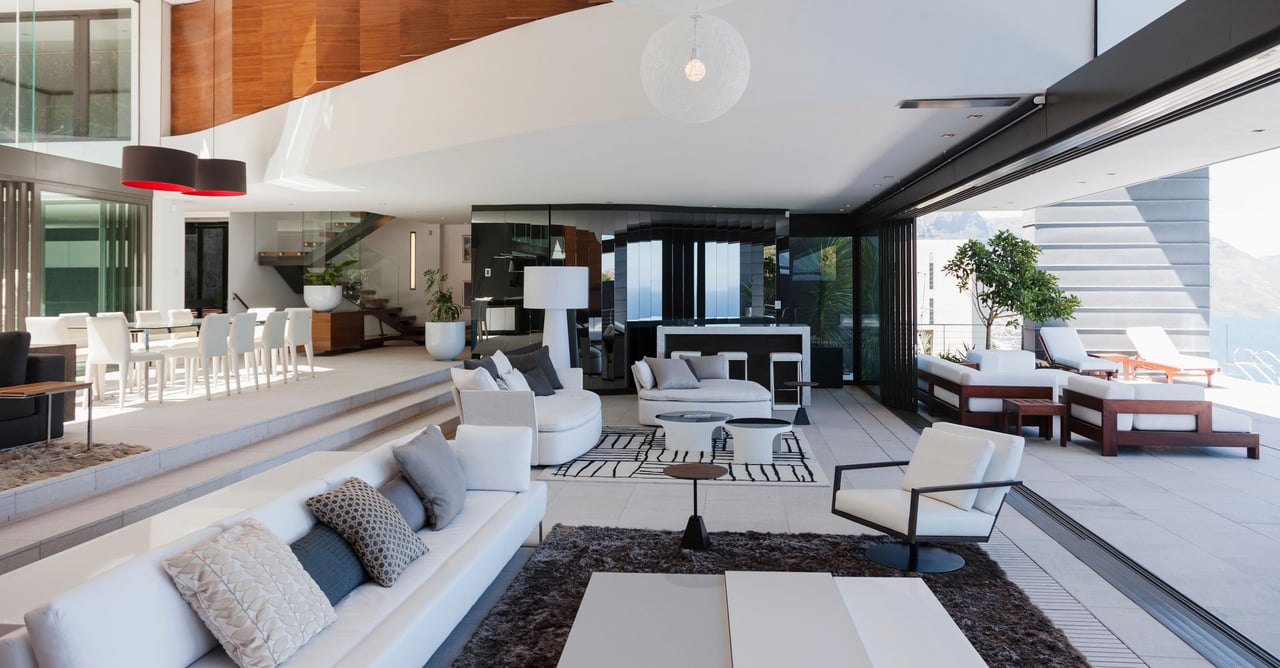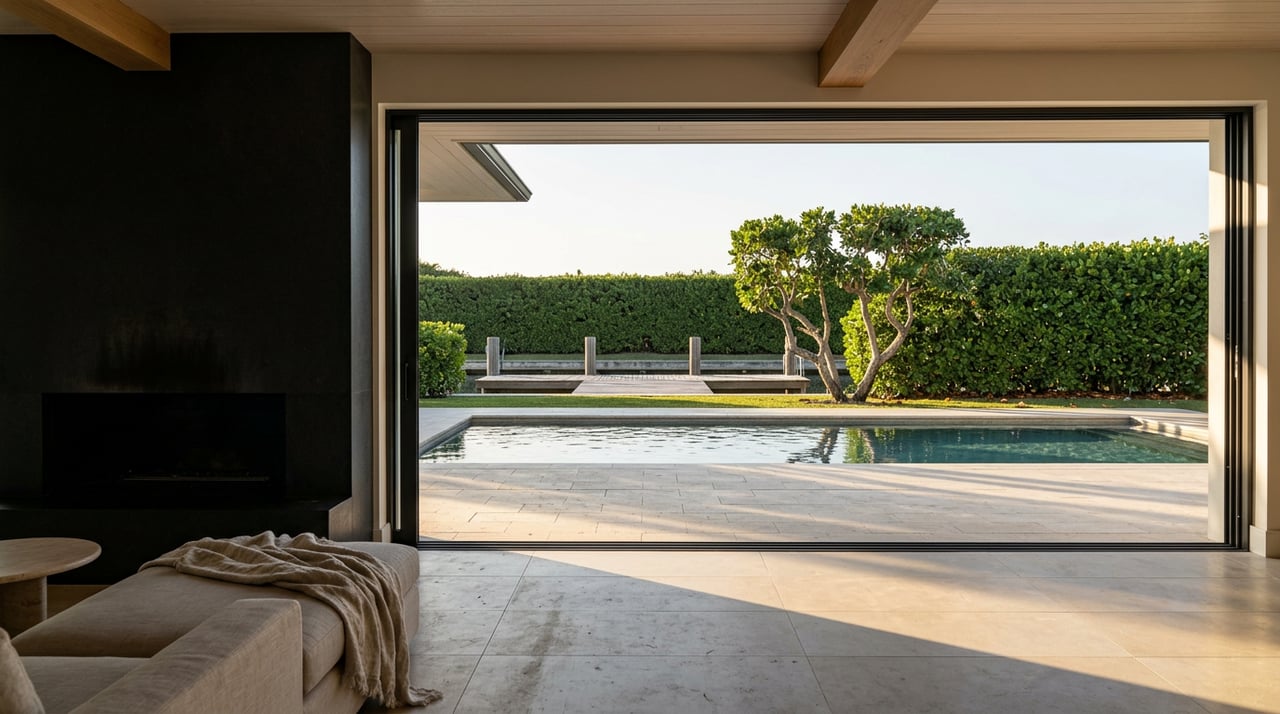
In February 2026, Frank and Dolores Mennella sold their oceanfront estate at 1940 South Ocean Boulevard in Manalapan for $68.3 million. The buyer was David MacNeil, founder of WeatherTech, and the property came with a 16,582-square-foot main house, a cabana connected to the mansion by a private underground tunnel, and a 150-foot dock. The Mennellas had listed it for close to $85 million the previous spring, so the sale closed at roughly 80 percent of ask. Sixty days later, in April 2026, the same couple turned around and bought a different Manalapan estate, a 1.5-acre parcel at 1460 South Ocean Boulevard, for $51.7 million.
Two trophy-level transactions, same family, same small town, sixty days apart. Between those two deals alone, more than $120 million changed hands in a market that, town-wide, sees somewhere around 13 to 16 house sales in a typical 12-month stretch.
That is the number nobody mentions when they quote you a "median home price" for Manalapan. And it is the reason that number, on its own, tells you almost nothing about what is actually happening on South Ocean Boulevard right now.
The Median Is Only as Stable as the Sample
Manalapan's closed-sale count for the 12 months ending August 2026 was 13 houses. Some individual months in that window saw fewer than five closings, which is thin enough that a single sale can swing the reported median by tens of millions of dollars depending on which week it happens to close in.
This is not a flaw in any one data source. It is what happens when a real estate market has the transaction volume of a boutique brokerage rather than a city. A median calculated from three sales is not describing a trend. It is describing three houses.
The practical consequence for anyone comparing Manalapan to a neighboring market on a portal is that the headline figure you see this month may look nothing like the headline figure you see next month, even if nothing about the underlying market has changed. The town did not get more or less expensive. A different handful of houses happened to close.
The Number That Actually Predicts a Negotiation
If the median is unstable, the more useful figure is the one that tells you how far a seller typically comes down from their ask. Over the 12 months ending August 2026, Manalapan houses that sold closed at a median of 83 percent of their final list price.
The Mennella sale on South Ocean Boulevard tracked close to that pattern almost exactly: listed near $85 million, sold at $68.3 million. That gap is not a discount a buyer negotiated out of weakness. It is closer to how pricing works at this tier across the board. Sellers in Manalapan's ultra-luxury segment tend to price aspirationally, and buyers who come in with a number well under ask are not being aggressive, they are following the same math the last several closings followed.
| Metric (Sept 2025 to Aug 2026) | Figure | What it tells you |
|---|---|---|
| House sales, trailing 12 months | 13 | Small enough that one sale can move the median significantly |
| Median sale-to-list ratio | 83.0% | Sellers routinely close well under their opening ask |
| Median price per square foot | $2,332 | More stable than the median dollar figure, since it adjusts for house size |
| Median days to go under contract (sold houses) | 193 | Realistic contract timeline for a house that does sell |
| Median days listed (active houses, Sept 15, 2026) | 216 | Homes currently on the market have already been sitting longer than that |
What Seventeen Months of Inventory Actually Means
The $5 million-and-up tier, which covers most of Manalapan's oceanfront and Intracoastal inventory, closed four transactions in the second quarter of 2026 totaling $210.6 million, at a median sale price of $49.8 million. That median was lifted almost entirely by one $105 million closing, the kind of single sale that set the tone for luxury coastal reporting across South Florida that quarter.
Median days on market for that trophy tier, measured from original listing to closing, was 140 days in the second quarter of 2026. Standing inventory at the end of that quarter represented 17.3 months of absorption at the pace deals were actually closing. In plain terms, if no new $5 million-plus listings had come onto the market at all, it would have taken close to a year and a half to sell through what was already sitting there.
That is not a market moving quickly in either direction. It is a market where a well-priced, well-positioned estate can still draw a buyer like MacNeil within a matter of months, while a mispriced one can sit for well over a year without much pressure from competing inventory to force a correction.
What This Means If You're Actually Transacting Here
A buyer watching Manalapan from the outside sees headline sales like the $68.3 million MacNeil purchase or the quarter's $105 million trophy closing and assumes the entire market moves at that velocity. It doesn't. Those numbers are outliers pulling a thin sample in one direction. The steadier signals, the 83 percent sale-to-list ratio and the 193-to-216 day timeline, are a better guide to what a realistic offer and a realistic closing calendar actually look like.
A seller weighing where to price against that same backdrop should treat the median they see on a portal as background noise rather than a target. The more useful reference points are the per-square-foot figure, which holds up better across a small sample than a raw dollar median, and the sale-to-list ratio, which tells you how much room buyers are actually finding between ask and close.
None of this changes the fundamental appeal of the town. Manalapan sits on a narrow barrier island between the Atlantic and the Intracoastal, just south of Palm Beach, with yacht access through the Boynton Inlet at its southern end. That geography is why estates here draw the kind of buyer who can write a check the size of MacNeil's or the Mennellas'. It just means the pricing conversation has to be grounded in transaction mechanics rather than whatever median a search happens to surface that week.
Frequently Asked Questions
Why do different real estate sites show such different median prices for Manalapan? Because the town closes so few house sales in any given month, often fewer than five, different sites pulling data at different moments, or averaging over different time windows, will land on different medians even when they're drawing from the same underlying pool of closings. The figure is real, it just isn't stable the way it would be in a market with hundreds of monthly sales.
Is Manalapan currently a buyer's market or a seller's market? The data points in a buyer-favorable direction at the moment. A median sale-to-list ratio of 83 percent and roughly 17 months of standing inventory in the $5 million-plus tier as of the second quarter of 2026 both suggest buyers have real room to negotiate and time to be selective, even as headline sales occasionally close at or near asking.
How long does it actually take to sell a home in Manalapan right now? Houses that sold in the 12 months ending August 2026 took a median of 193 days to go under contract. In the $5 million-plus tier specifically, the median time from original listing to closing in the second quarter of 2026 was 140 days. Either way, plan on a process measured in months, not weeks.
If you're weighing a move into Manalapan, or trying to price an estate against a market this thin, the numbers on a listing site won't tell you the whole story. Jared Nelson and the Taylor Kane Group can walk through what the current sale-to-list gap and inventory timeline actually mean for your specific property or purchase. Schedule a consultation to talk through the details before you set a price or make an offer.