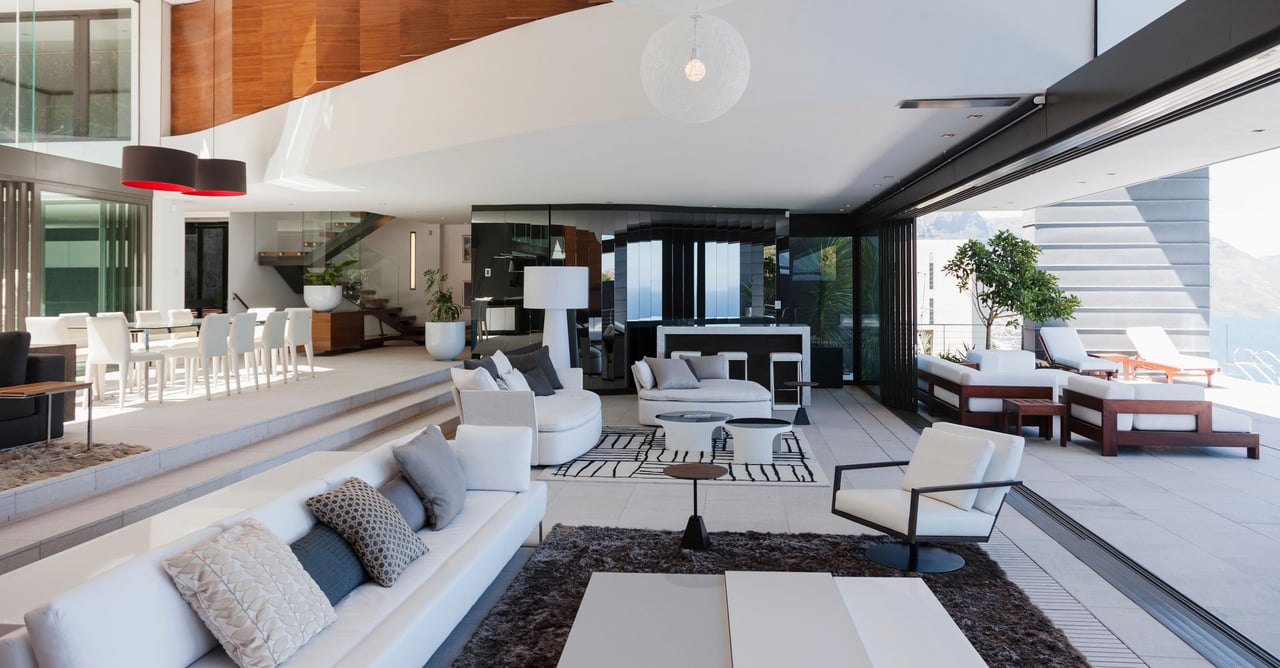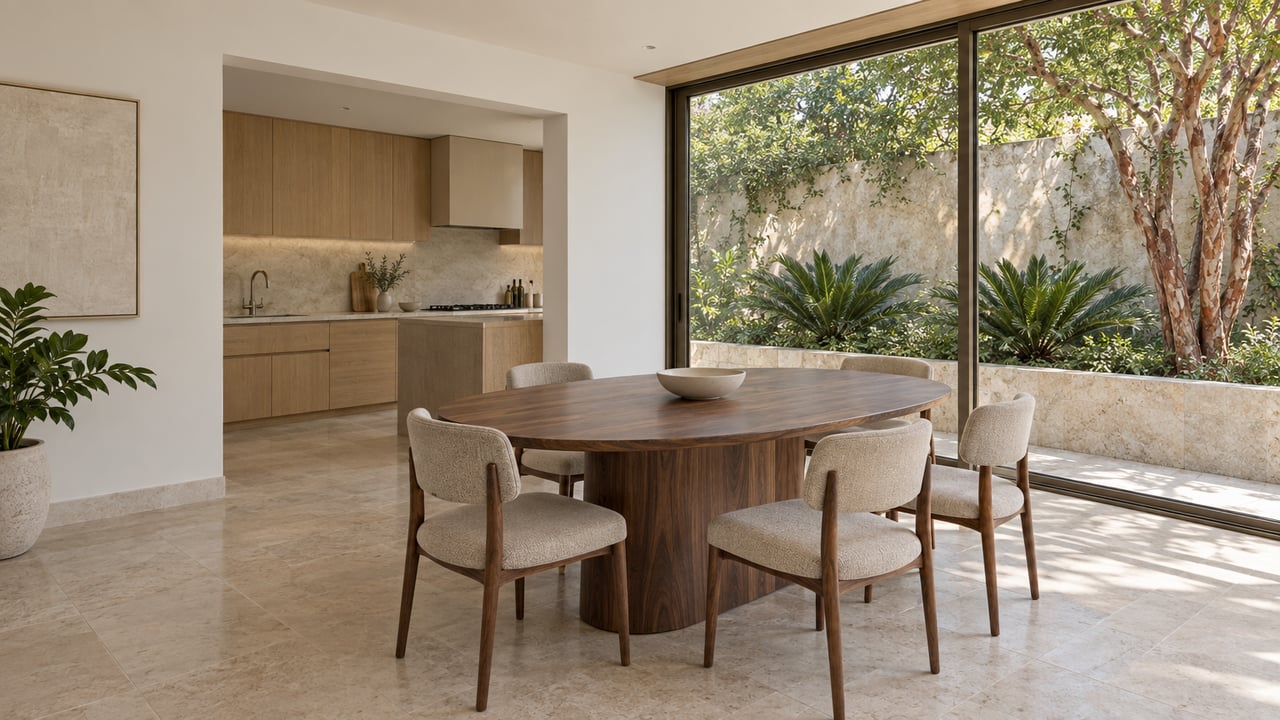
On the Saturday night Nômade opened its doors at the Shops at Village Pointe, the plaza looked nothing like a restaurant launch. The strip on Southwest 18th Street has spent years running on sushi counters, small independent cafés, and Rafina Greek Taverna, the kind of neighborhood lineup that fills up by 7 and empties by 9. Then a 250-seat room showed up next to it. Nômade's Westport, Connecticut flagship is a fraction of that size. This is the brand's first Florida location, and by every measure it's the largest single restaurant to open in Boca Raton this year.
That fact alone is a curiosity. Read against everything else that's opened, closed, or reopened around it in 2026, it's a pattern. Boca Raton's restaurant growth this year didn't concentrate downtown, where a flagship room would traditionally go. It split into three places that are behaving nothing alike, and the size of the rooms landing in each one is the clearest evidence of what's actually happening.
The Corridor That Wasn't Built for a 250-Seat Room
Nômade's co-owners, Mary C. Webster and Zsolt Viszkok, built the Boca Raton space around Webster's design studio work and a childhood spent between Liberia and Ireland. The room uses handcrafted Moroccan glassware, tile work framing the bar, and an Italian marble bar top, and the kitchen, led by executive chef David Núñez alongside original concept chef Zoltán Kovács, runs a menu that moves from avocado crispy rice and Peking duck dumplings to lamb lollipops and lomo saltado. None of that description matters as much as where it landed. A residential plaza that previously topped out at counter-service portions is now home to a 250-seat dinner destination with a late-night bar crowd.
It isn't alone out there. Pepe's Cantina opened its eighth location earlier this year at Regency Court in Woodfield Plaza, aimed squarely at the West Boca residential base rather than at anyone driving in from downtown. Both bets share the same logic: put the room where the rooftops already are, and skip the assumption that a destination restaurant needs a downtown address to fill on a Tuesday.
Town Center Is Recruiting From Manhattan and Brickell, Not Fort Lauderdale
The mall side of I-95 is telling a different story. Felice, a family-run Tuscan restaurant and wine bar founded in 2007 on Manhattan's Upper East Side by restaurateur Jacopo Giustiniani, is listed as coming soon to Town Center at Boca Raton at 6000 Glades Road. It's part of SA Hospitality Group's expansion, and the Boca location becomes the company's third in Florida, joining existing restaurants in West Palm Beach and Brickell. Limani Grill, a Mediterranean seafood concept built around market-fresh crudo and charcoal-grilled dishes, is heading to the same development.
What both openings share is a supply chain that already runs through South Florida's two other major restaurant markets. Town Center isn't pulling in a chef testing a new idea. It's pulling in brands with an established multi-city footprint that already knows how to operate a bigger room, and it's choosing Boca as the next stop on a route that already includes West Palm Beach and Miami.
Downtown's New Rooms Got Smaller, Not Louder
Downtown took the opposite approach this year, and the room sizes prove it. MINŌ Omakase & Sake Bar opened in April at 114 NE Second Street in Mizner Plaza, right next to Kapow Noodle Bar. The whole restaurant seats 30 people, with only 10 of those seats at the counter. It comes from Kapow Hospitality Group partners Jamie Day, Corri Day, Paul Greenberg, and Vaughan Dugan, with the kitchen led by executive chef JM Canlas, formerly chef de cuisine at MILA Omakase. The concept is built around omotenashi, the practice of anticipating a guest's needs before they're spoken, and shun, the idea of serving an ingredient at its precise peak.
A few blocks over, Charm City Burger Co. opened its second-ever location on January 23 at 201 NW First Avenue, a short walk from the Brightline platform, after roughly two years of delays from its original Deerfield Beach spot. Black Star Bakery and Cafe, a New York import opening its sixth location overall, landed at Royal Palm Place from founders Dan Magor and Odehel Magor, known for bagels, croissants, and all-day breakfast plates. And Stage, the restaurant chef Pushkar Marathe opened on Restaurant Row last year, closed after its final dinner service on July 5 and reopened in mid-August as Boca Brasserie, still under Marathe's culinary leadership but with a new menu built around grilled steaks, house-made pastas, wood-fired sourdough flatbreads, and a martini program with tableside service.
None of these rooms is chasing size. Downtown added density instead, four very different concepts within walking distance of a train stop that didn't function as a restaurant draw two years ago. That's a different kind of growth than a 250-seat room five miles away, and it's the reason the old habit of defaulting to Mizner Park for a Friday night no longer describes what's actually on offer there.
One Night in October Puts All Three on the Same Block
Mizner Park Amphitheater hosts the debut of Passport to Pours on Saturday, October 3, from 4 to 10 p.m. The festival sends guests through 12 country-inspired tasting stations with a commemorative passport that gets stamped at each stop. Confirmed destinations include Italy with Campari Group, Germany with the American German Club of the Palm Beaches, Japan with Kapow Noodle Bar, Thailand with Lemongrass Asian Bistro, the United States with American Social, and France with Le Petit Parisien. Brightline is the event's official transportation partner, and the Boca Raton station sits about a five-minute walk from the amphitheater. A portion of proceeds benefits Rachel's Gate, a South Florida nonprofit serving senior, hospice, and special-needs dogs.
Ticket pricing has been reported a little differently depending on the outlet. One listing puts general admission at $58 with a $24 non-alcohol option, while another cites $60 general admission, $90 VIP, and $110 VIP early entry, with prices rising after September 15.
The location matters as much as the lineup. Passport to Pours happens on downtown's home turf, but the food built into it, a Japanese noodle bar's table next to a German social club's table next to a Thai kitchen's table, is the same kind of global mixing driving Nômade's 250 seats on Southwest 18th Street and MINŌ's 30 seats a few blocks from the amphitheater. For one Saturday, the geography collapses, and a resident can taste what's actually landed in all three zones without picking one.
Boca Raton didn't get one bigger restaurant scene this year. It got three that grew apart from each other, and the next dinner decision worth making starts with picking a zone before picking a menu.
Boca Raton's neighborhoods keep shifting a few blocks at a time, in restaurants and in real estate alike. If you're curious how a specific plaza, corridor, or zone fits into the bigger property picture, Taylor Kane Group is a call away.